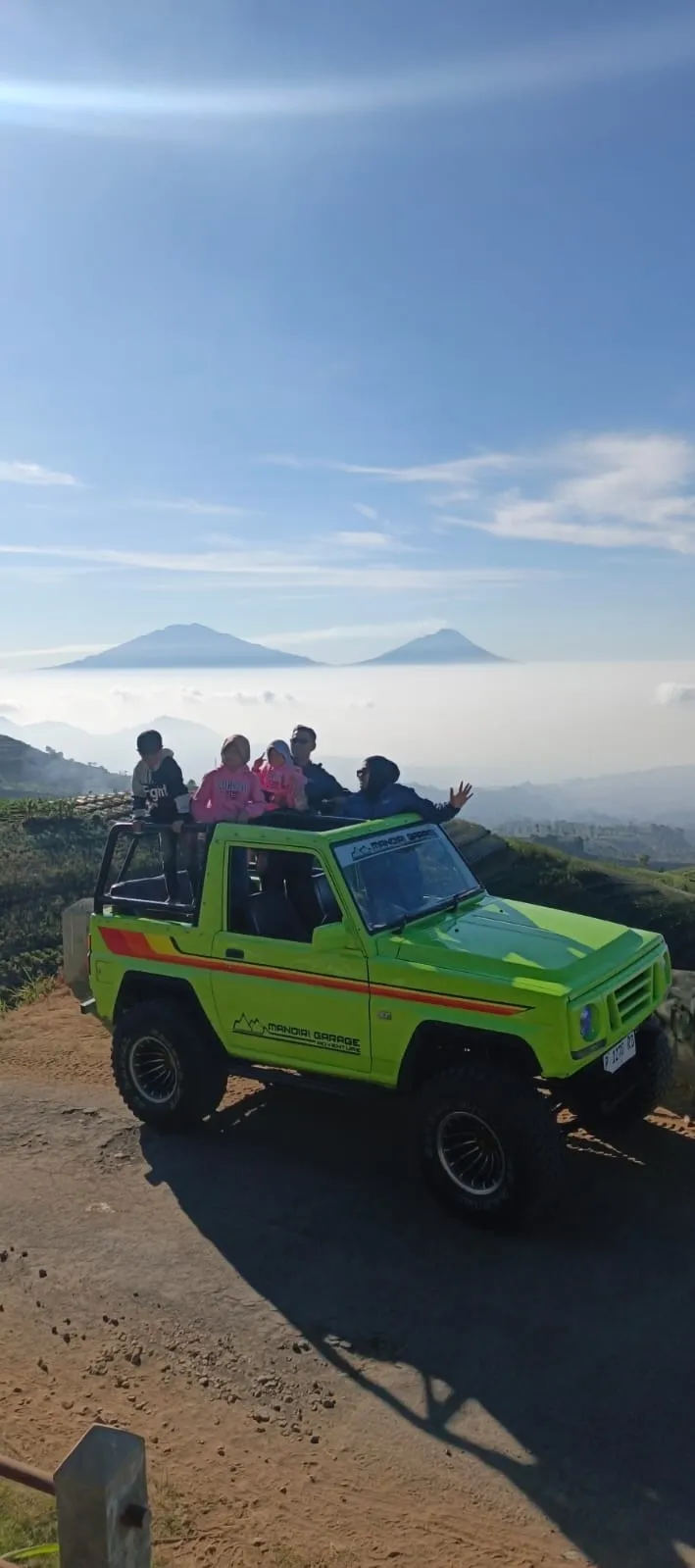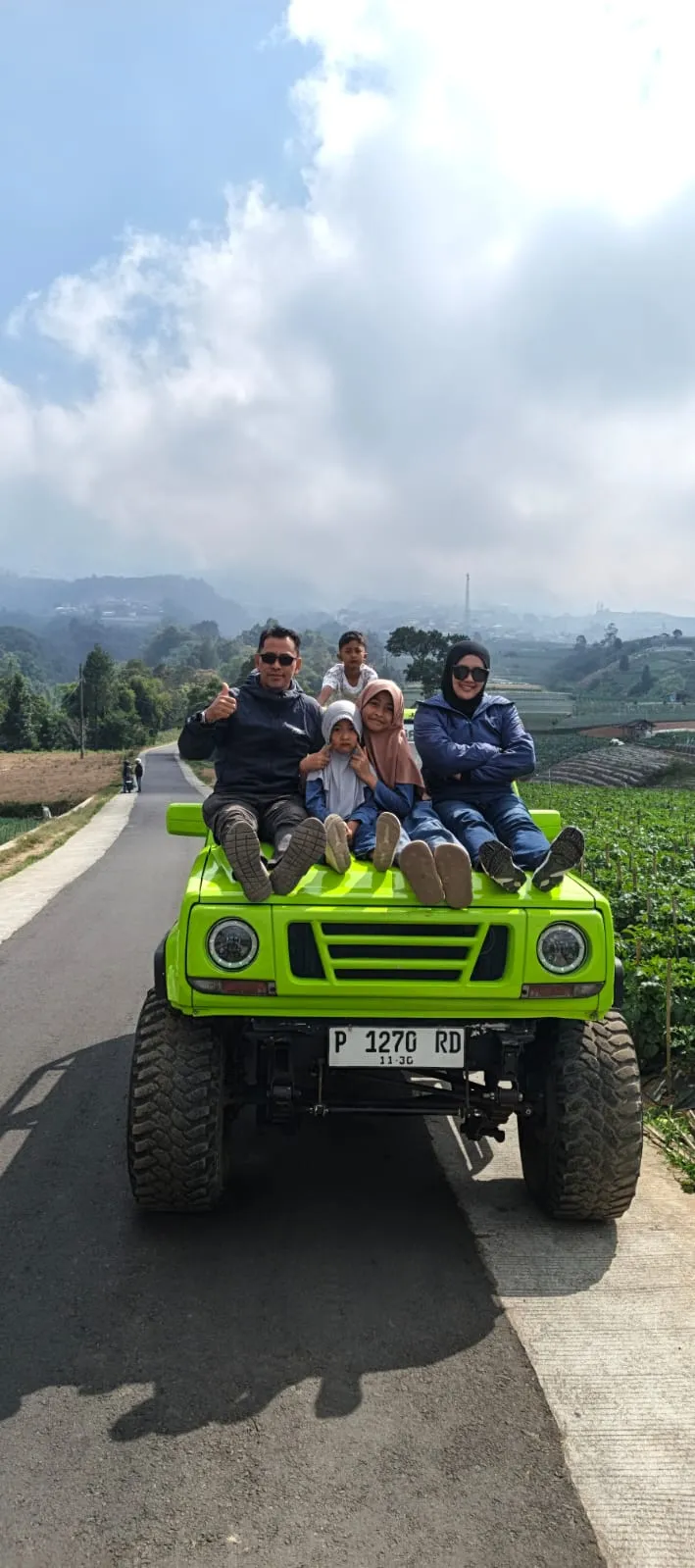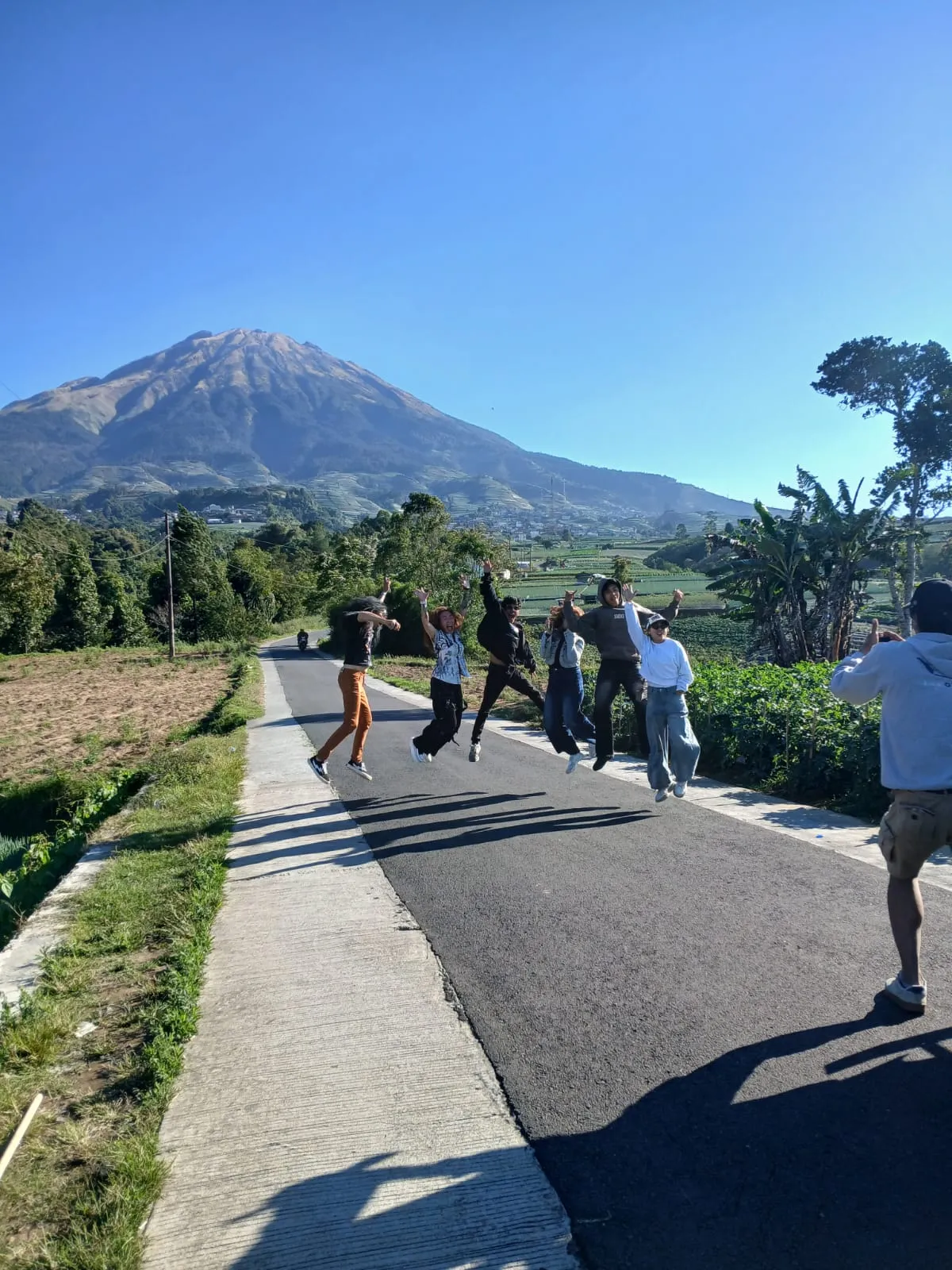
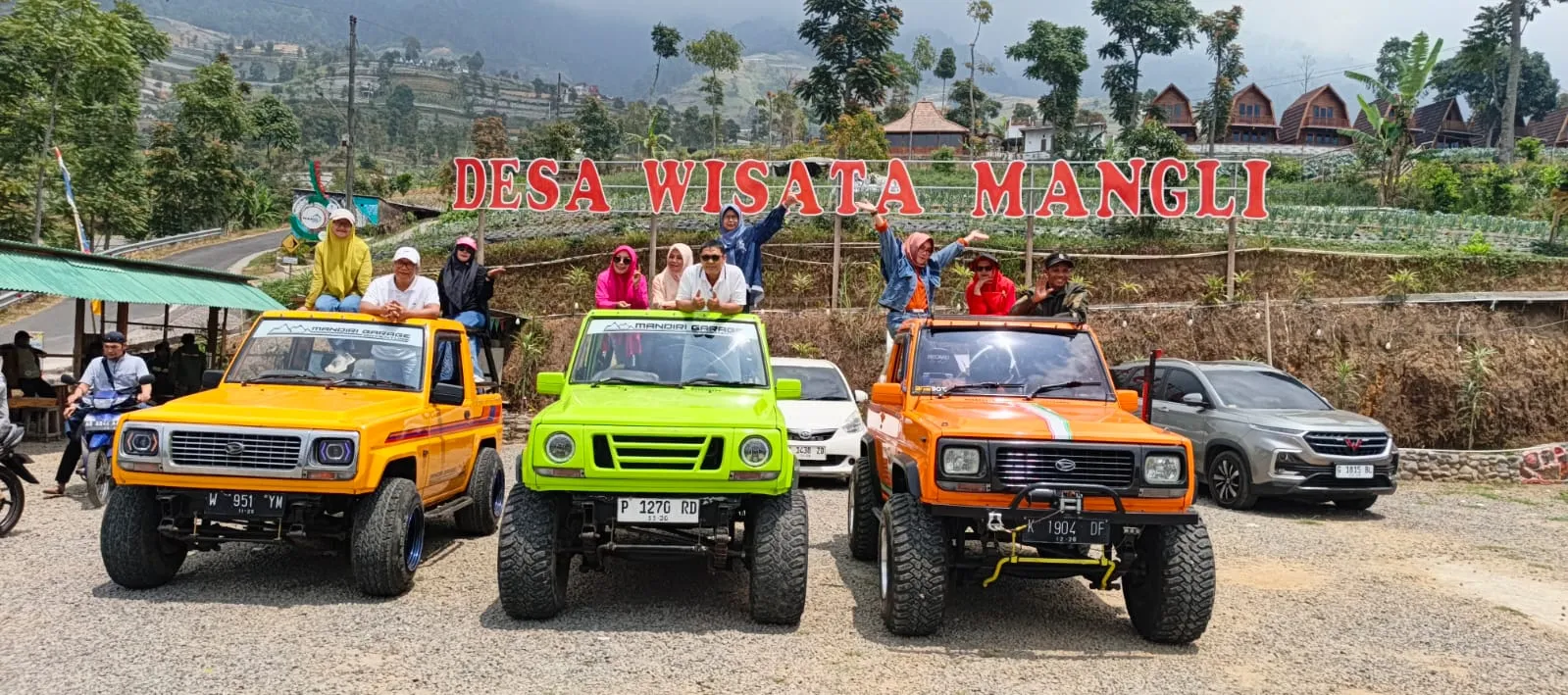
Mountain tracks are part of the fun. Here are the habits we have seen make the rough sections easy, even for first-timers, from how you sit to what you wear.
If you have never been in an open jeep on a mountain road, the first few minutes can be a surprise. The seat moves, the wind comes from every side, and the track under the wheels is nothing like the highway you drove in on. Most guests are grinning by the first corner. A few spend the first stretch gripping the rail and wondering if they chose the right package.
The good news is that comfort on a jeep tour is mostly about small habits, not fitness or experience. Our drivers do this route every day, and after watching thousands of rides, the same handful of tips come up again and again. This is the version we would tell you if we were standing next to the jeep before you climbed in.
Why the ride feels bumpy (and why that is fine)
The tracks around Mount Sumbing were built for farmers and villagers, not for sightseeing, which is exactly why the views are so good. Some sections are paved and smooth, some are packed earth, and some are rough stone and loose gravel where the jeep rocks from side to side. An open-air jeep has firm suspension and no roof, so you feel the road more than you would in a car, and you also see much more of what is around you.
Knowing that in advance changes how the ride feels. The bumps are not a sign that something is wrong. They are simply the cost of reaching places a regular car would never get to, and a little preparation turns them from a worry into part of the fun.
1. Ride loose, not stiff
The most common mistake is bracing. When the jeep drops into a rut, your instinct is to lock your arms and tense your back. That sends every jolt straight up your spine and leaves you tired and sore after an hour.
Do the opposite. Sit back so your back is supported, keep your knees slightly bent, and hold the grab handles lightly rather than gripping them. Let your hips and shoulders move with the jeep, a bit like riding a horse. Your body is a better shock absorber than a rigid one.
- Sit all the way back. Perching on the edge of the seat makes every bump feel bigger.
- Keep your feet flat. Planted feet give you a stable base without any tension.
- Hold, do not squeeze. Use the handle as a reference point, not a lifeline.
It also helps to look ahead instead of down. Seeing the next dip coming gives your body a moment to relax into it, and it happens to be where the scenery is.
2. Secure everything
An open jeep means loose items travel. Wind will happily take a hat, a paper map or a lightweight scarf, and a phone that slips off your lap does not always land softly.
Keep bags on your lap or wedged between your feet rather than on the seat beside you. Put phones on a wrist or neck strap if you have one, and slip sunglasses on a cord if you are wearing them. If you plan to film, hold the phone with both hands and keep your elbows tucked in so the footage is steadier and the phone stays in your grip.
For a longer list of what to bring and what to leave behind, see our open-air jeep packing list. It covers the small things that are easy to forget until you are already on the road.
3. Talk to your driver
Your driver is the best tool you have for a comfortable ride. They know every dip, bend and loose patch on the route, and they adjust speed constantly without you noticing. What they cannot know is how you are feeling unless you say so.
If anyone feels queasy, wants to slow down, or simply needs a moment to stretch, tell them. Nobody will think less of you, and it is far easier to pause for a minute than to push through feeling unwell. The same goes for the opposite request: if the group is enjoying the rough sections and wants a bit more of it, the driver is happy to hear that too.
The guests who enjoy the ride most are usually the ones who chat with the driver in the first ten minutes. It sets the pace for the whole day.
4. Use the stops
Every package has several stops, and they are not only for photos. They are built-in breaks. Step out, stretch your legs, drink some water and let your body reset before the next stretch of track.
If you tend to get motion sick, eat something light before you leave rather than going out on an empty stomach or after a heavy meal. Sip water instead of gulping, and take a few slow breaths at each stop. Choosing a package with more stops can actually make the day feel easier, because the rides between viewpoints are shorter. If you are not sure which suits you, our guide to picking the right jeep route explains how the packages differ.
5. Dress for open air
Because there is no roof, the weather is part of the ride. Mornings on the mountain can feel cool and breezy, and the sun can be strong once it clears the ridge. Layers work better than one heavy item.
- A light jacket that you can zip up against the wind and take off at a stop.
- Closed shoes with grip. Sandals are fine for the car park, but not for stepping in and out on uneven ground.
- A hat or cap that fastens, or one you are happy to hold on your lap.
- Sunscreen and sunglasses for the open sections.
- Clothes you do not mind getting dusty. Dry tracks leave a fine layer on everything.
If you are heading out for sunrise, add one more layer than you think you need. We cover that experience in is the Sunrise Package worth the early alarm.
Riding with kids or older family members
Jeep tours are a good family outing, but a few extra considerations help. Younger children usually do best on shorter routes with more frequent stops, and they should sit between adults or next to the sturdiest handle rather than on the outside edge. Let them hold on with both hands during the rougher sections and point out things to look at so they are watching the scenery instead of the bumps.
For older relatives or anyone with a bad back or knees, a gentler pace makes a real difference. Tell the driver before you set off, ask for the smoother seat position, and choose a shorter package if you are unsure. You can always add stops on another day. Remember that each jeep takes up to 4 guests, so there is usually room to sit comfortably rather than squeeze in.
Quick answers
Will I get sore from the ride?
Most guests finish feeling pleasantly shaken rather than sore, especially if they follow the first tip. Riding stiffly is what causes aches, not the road itself.
Is it safe for first-timers?
Yes. Our drivers know the terrain well and adjust their speed to the track and to the group. Hold the handles, stay seated, and keep your hands and arms inside the jeep.
What if I get motion sick?
Eat lightly beforehand, sit towards the middle or front where you can see the road, look at the horizon, and tell your driver early so they can slow down or pause at the next safe spot.
Should I book a short or long route?
If this is your first time, a shorter route is a relaxed way to find out how you feel on mountain tracks. If you already know you enjoy it, take a longer one. Our price breakdown shows exactly what is included with each package, so you can compare before you decide.
That is really all there is to it: sit loose, keep your things close, speak up, use the stops and dress for the wind. Do those five things and the bumpy tracks stop being something to endure and become the best part of the day.
See Sumbing from an open jeep
Up to 4 guests per jeep, with fuel, jeep and driver included. Send us your date and we will confirm the route.